A character can be beautifully drawn, perfectly painted, and technically clean, yet still feel stiff the moment it moves. That is the real question behind what makes animation feel natural. Natural movement is not created by adding more drawings or smoothing every action. It comes from making deliberate choices about timing, spacing, weight, and the character’s reason for moving.
Traditional animators have always known that the audience does not count frames. They read intent. They feel whether a character is thinking before acting, whether a heavy object resists motion, and whether a fast gesture has a clear path through space. When those decisions are clear, even a simple drawing can come alive.
What Makes Animation Feel Natural?
Natural animation has structure beneath the performance. A character does not move because the animator needs to get from pose A to pose B. The character moves because something has changed: they see something, decide something, react to something, or try to achieve something.
That cause-and-effect chain gives an action credibility. Before a character reaches for a glass, they may look at it, shift their balance, and open their hand. Not every action needs all of those beats, especially in a fast scene. But removing every preparation and reaction leaves motion that feels mechanical rather than alive.
The best animation is specific. A tired character rising from a chair should not use the same timing, posture, or spacing as an excited child jumping up. The action may be similar on paper, but the force, rhythm, and attitude are different. This is why copying a generic walk cycle rarely solves a performance problem. The animator must decide who is walking, where they are going, and how they feel about it.
Timing Gives an Action Its Meaning
Timing is the number of frames assigned to an action and to the pauses around it. It tells the audience how much an object weighs, how quickly a character thinks, and whether a moment is calm, sharp, awkward, or funny.
A bowling ball and a balloon can travel the same distance, but they should not take the same number of frames or accelerate in the same way. A heavy object usually needs a convincing start, a sense of force behind it, and a reaction when it stops. A light object may drift, flutter, or change direction more easily.
Timing also controls thought. A short hold before a character answers can make them seem uncertain or suspicious. A longer hold can create embarrassment, sadness, or comic anticipation. If the pause is too long, the scene drags. If it is too short, the audience misses the thought. There is no fixed frame count that works for every scene. Context decides it.
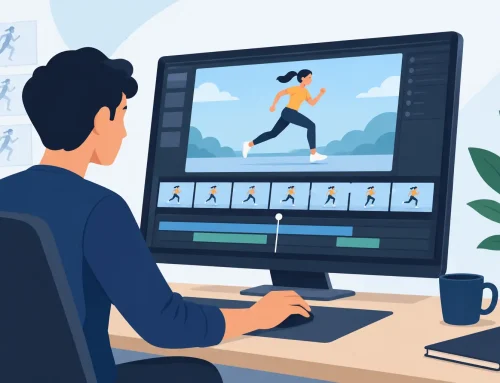
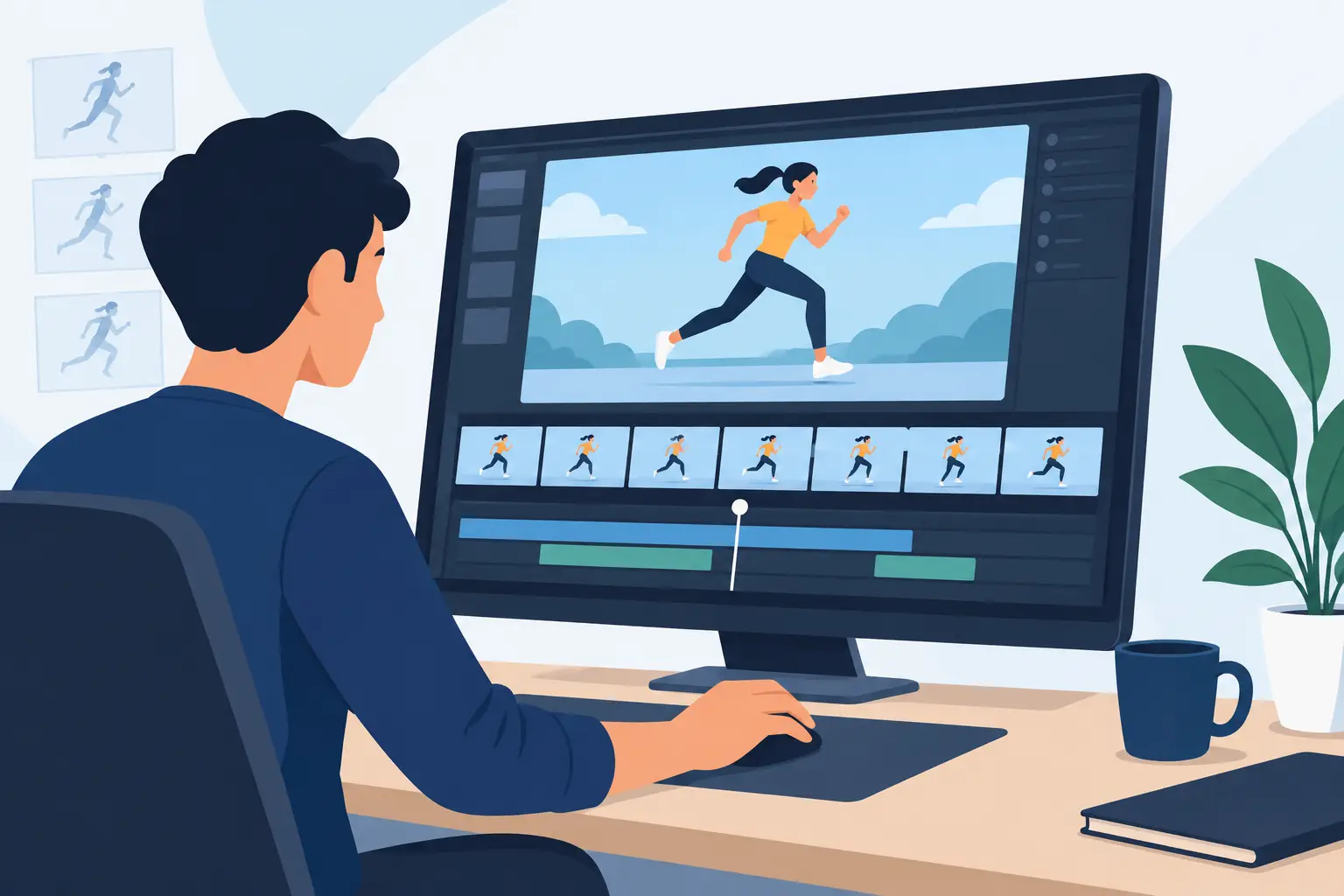
For that reason, timing should be tested while the scene plays. Staring at an exposure sheet or changing frame durations one at a time can separate the technical adjustment from the feeling you are trying to judge. Real-time timing control lets you see the result as you make the change, which keeps attention on the performance instead of the interface.
Spacing Shows Force and Speed
Timing and spacing are often taught together, but they solve different problems. Timing is how long the action lasts. Spacing is the distance between successive positions. Two actions can take twelve frames and still feel completely different because their drawings are spaced differently.
Even spacing creates a steady, mechanical rate. That may be exactly right for a machine, a conveyor belt, or a character deliberately moving with restraint. Most living actions, however, change speed. They ease out of one pose, accelerate through the middle, then ease into the next pose. The drawings bunch closer together at the slow points and spread farther apart where the action is fast.
This is not a formula for putting every action on rails. A quick head turn may snap into place with very little easing. A character losing balance may have irregular spacing because they are correcting themselves mid-action. Natural movement often includes small imperfections. The goal is not mathematical smoothness. The goal is a convincing change of energy.
Build Movement From Clear Poses
Strong poses make natural animation easier to plan and easier to revise. They establish the important storytelling moments before the in-betweens begin to fill the path.
Start by identifying the key change in the scene. Is the character gathering courage? Is the character trying to hide a reaction? Is a punch meant to feel powerful, reckless, or surprisingly weak? Put the major poses where the audience needs to read them, then test the sequence as rough drawings.
A good key pose has a clear line of action, a readable silhouette, and a definite sense of balance. If a pose only works after you explain it, simplify it. If both arms, legs, and the torso point in similar directions, the figure may flatten into a confusing shape. Separate the forms enough that the action reads at a glance.
Then add breakdowns that explain how the character gets from one key pose to the next. Breakdowns are where an animator decides the arc, the twist, the leading body part, and the change in weight. They are not merely drawings placed halfway between keys. A halfway drawing often produces halfway thinking.
Arcs Keep Drawn Motion Believable
Most organic movement travels in arcs. A hand swings from the shoulder, a head turns around the neck, and a hip shifts over a planted leg. Straight paths can work, but they need a reason: a robot extending an arm, a blade dropping, or a character making a stiff, intentional gesture.
Track the moving parts of your rough animation. Watch the nose, wrist, elbow, knee, and center of the head. If their paths wobble without purpose, the character can feel rubbery or unstable. If every path is too perfect, the motion can feel sterile. A clean arc should support the force of the action, not advertise itself.
Overlapping action helps here. When a character stops, not every part of the body stops on the same frame. The torso may settle first, then hair, clothing, hands, or a loose backpack may continue. This follow-through gives the audience a sense that the character has mass and that different parts are connected by flexible forces.
Be selective. A small, quiet acting shot can be damaged by too much overlap. In a restrained scene, a tiny eye shift or delayed hand movement may be enough. Bigger action earns bigger follow-through.
Weight Comes From Contact and Resistance
Weight is not achieved by drawing thicker lines or by slowing everything down. It comes from showing contact, force, and resistance.
When a character puts a foot down, the body needs to be supported by that foot. The hips shift, the leg compresses, and the planted foot stays planted unless it is meant to slide. When that contact is missing, the figure appears to float. When a character lifts something heavy, the body should organize around the effort: hands grip, shoulders respond, the back may brace, and the action may take longer to begin.
This is especially important in walk cycles. A walk is not simply alternating legs. The body rises and falls, the hips shift from side to side, and each foot has a clear period of contact with the ground. A character’s personality can change the cycle, but the support must still make sense. Even exaggerated cartoon movement needs an internal logic.
Preserve the Life in the Roughs
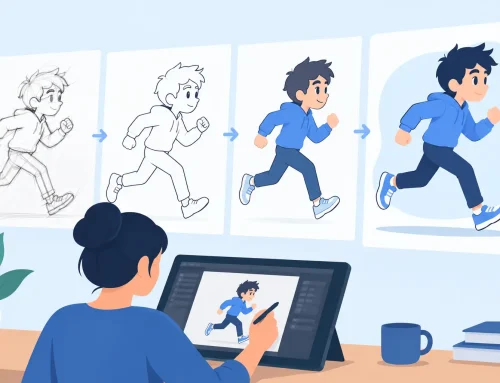
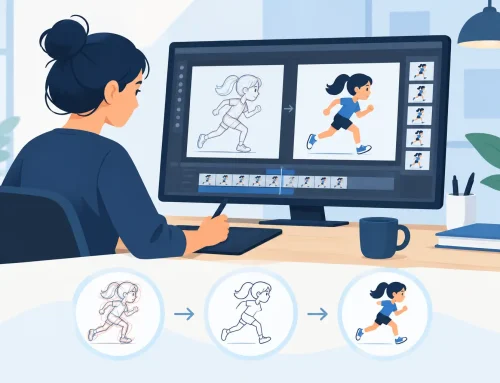
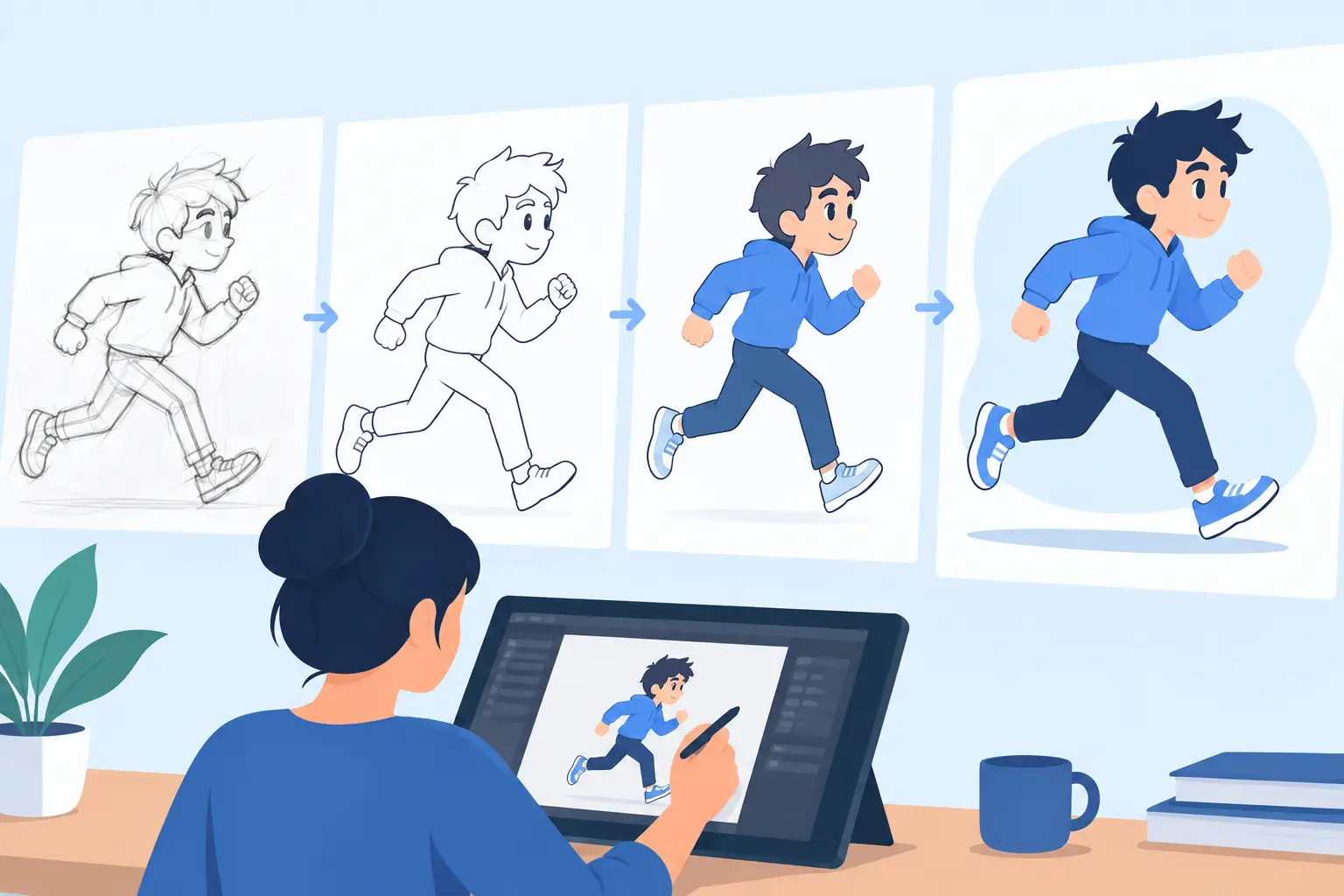
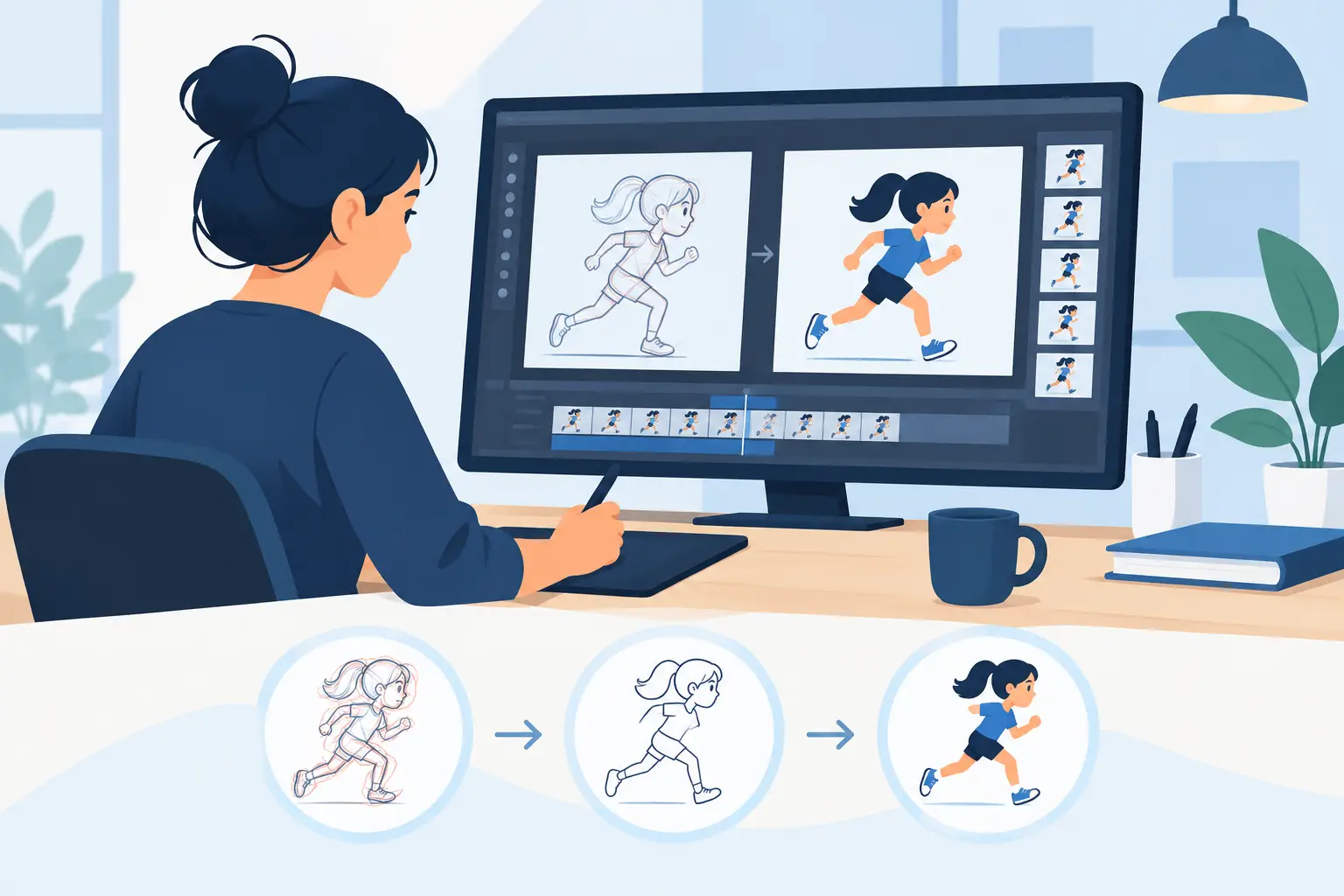
Many scenes lose their natural feeling during cleanup. The rough pass has energy, asymmetry, and a quick decision-making quality. Cleanup can accidentally straighten the gesture, equalize the shapes, and remove the very irregularities that made the acting feel alive.
Do not treat clean-up as tracing. Preserve the line of action, the tilt of the head, and the relationship between the major forms. Check the cleaned scene in motion constantly. A single polished drawing may look excellent by itself while disrupting the flow of the shot.
The same caution applies to painting. Color should support readable forms and production speed, not become a delay between rough animation and playback. Efficient painting tools matter because frequent playback is how you catch broken arcs, drifting volumes, and timing that looked right on a single frame but fails in motion.
Let the Scene Play Before You Judge It
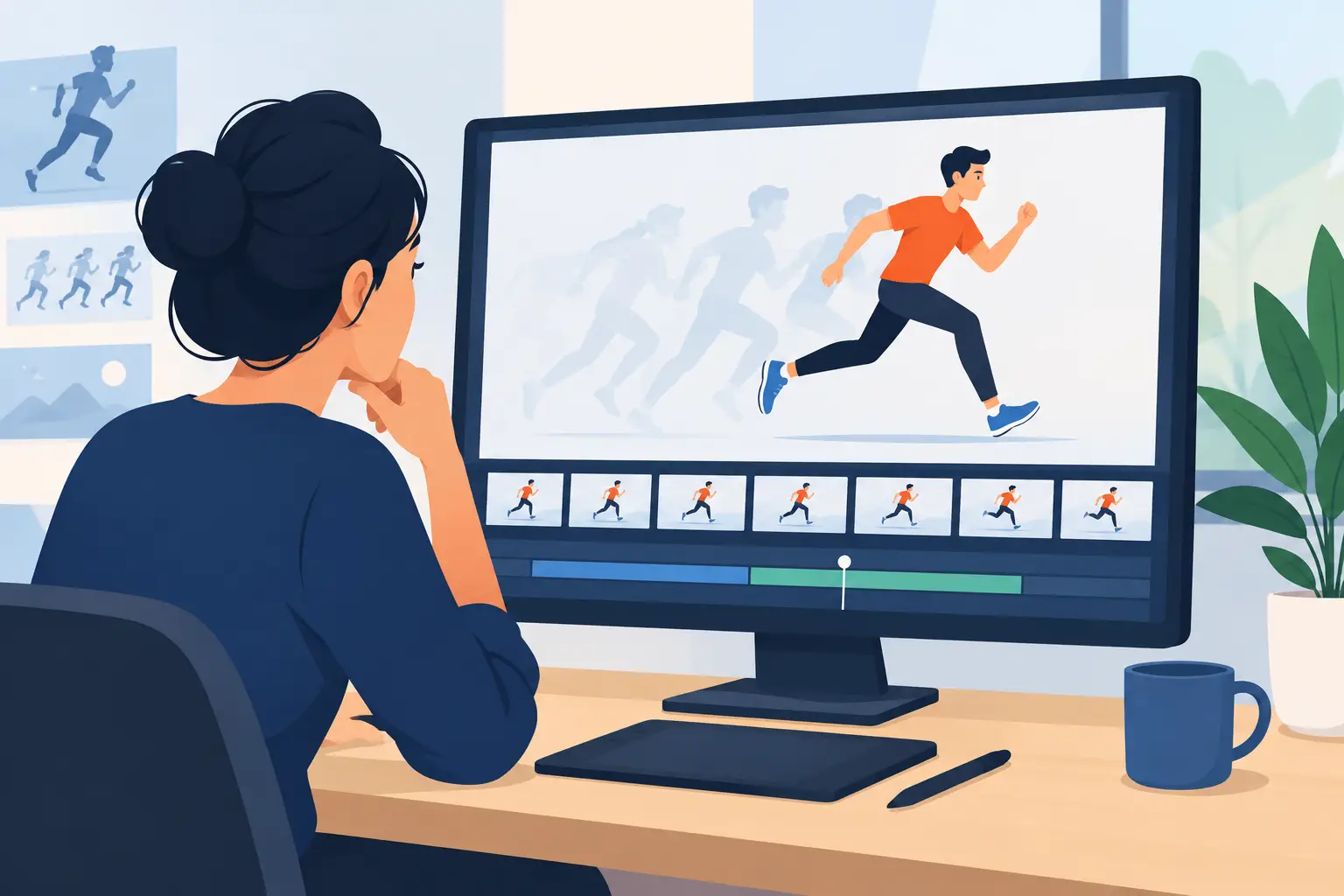
Natural animation is judged in motion. Scrub through a scene to inspect drawings, but play it repeatedly to judge acting, rhythm, and force. Watch it at normal speed, then watch it without sound. If the action only works when you know what it is supposed to be, the poses or timing may need more clarity.
This is where a traditional frame-by-frame workflow remains powerful. You can rough the idea quickly, adjust the exposure while the scene runs, clean the drawings without losing the performance, and make decisions based on what the audience will actually see. FlipBook is built around that working method, with drawing, painting, playback, and real-time timing edits kept close to the animation itself.
A natural scene does not need more frames. It needs better reasons for each frame to exist. Keep your roughs loose long enough to find the performance, test timing while you can still change it, and let every pose carry the character’s weight, thought, and intent.