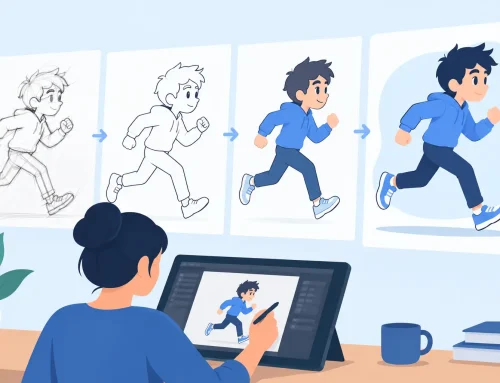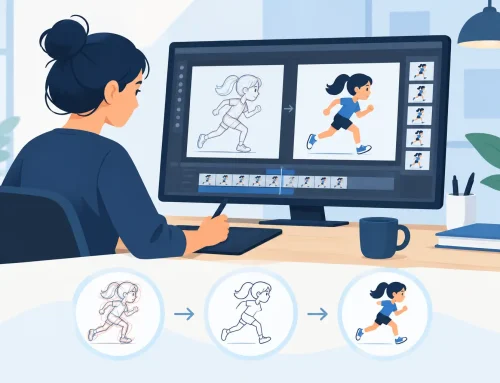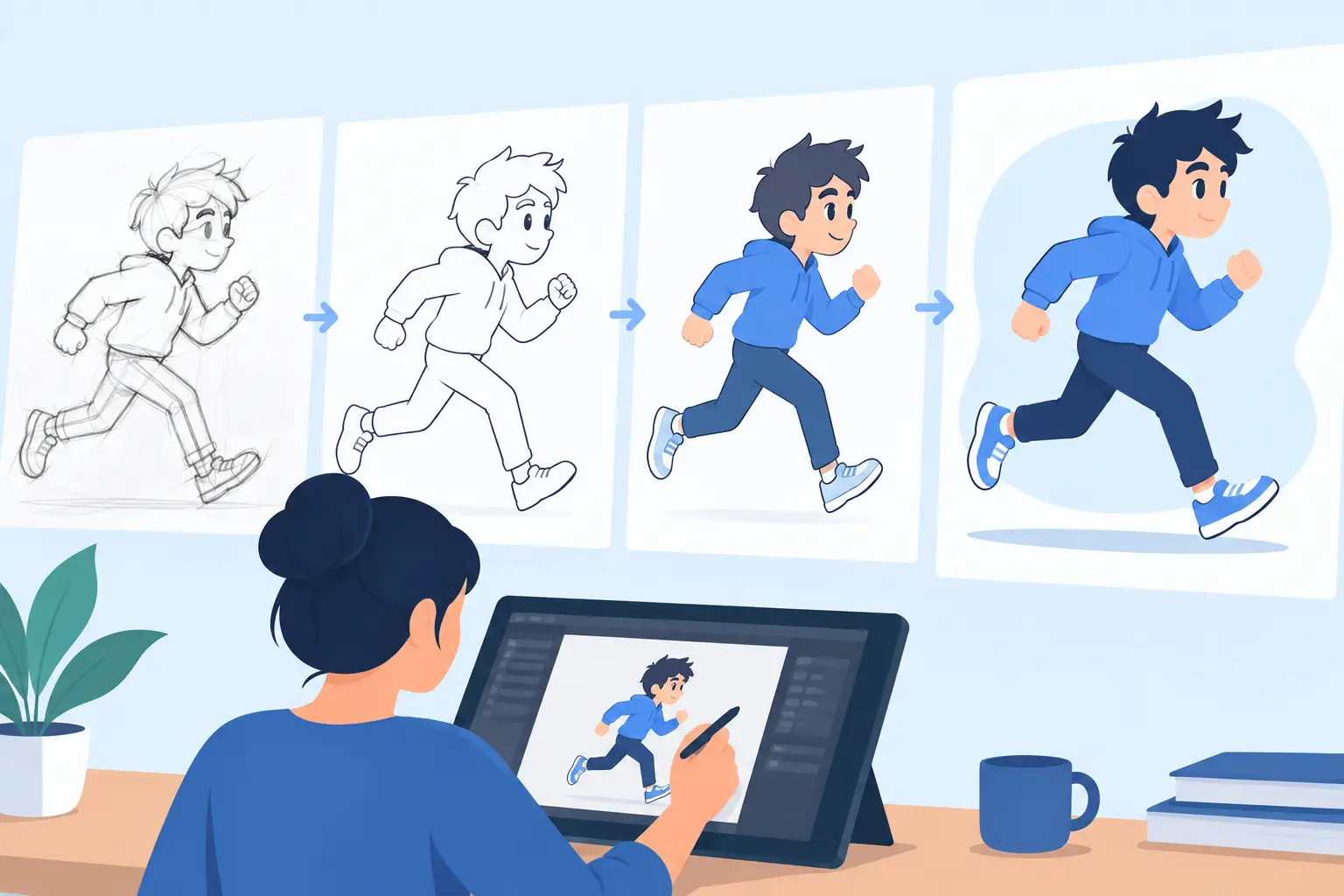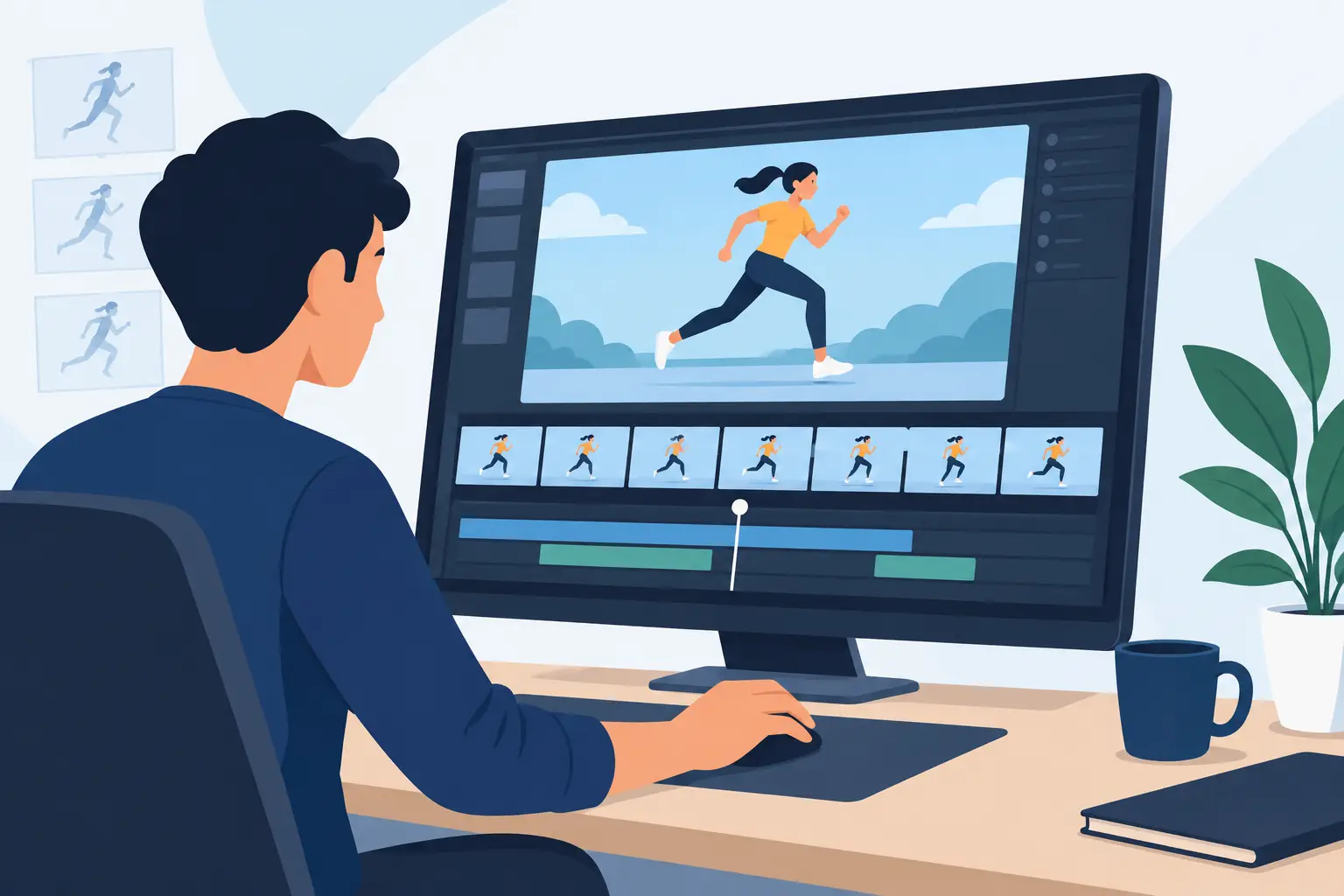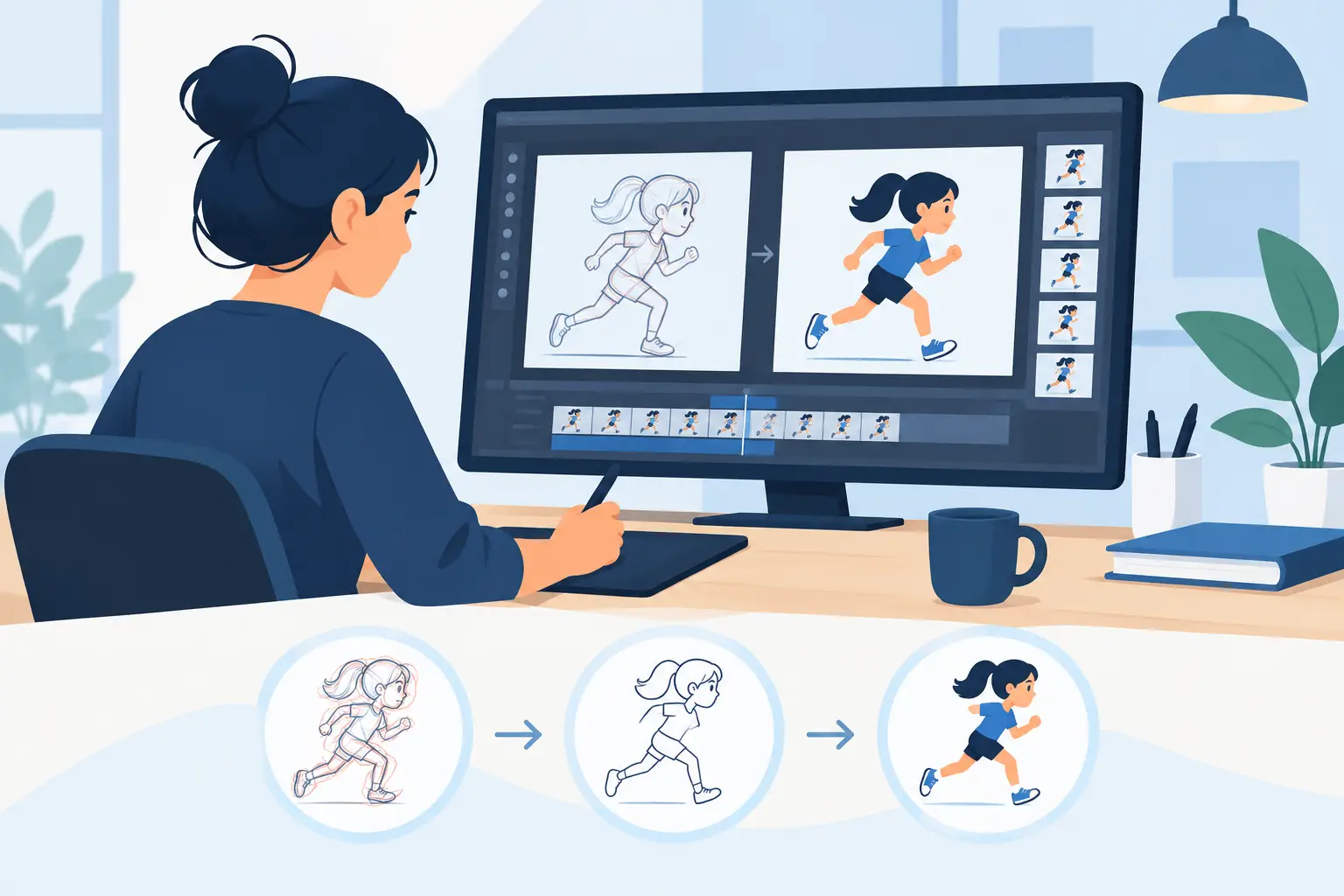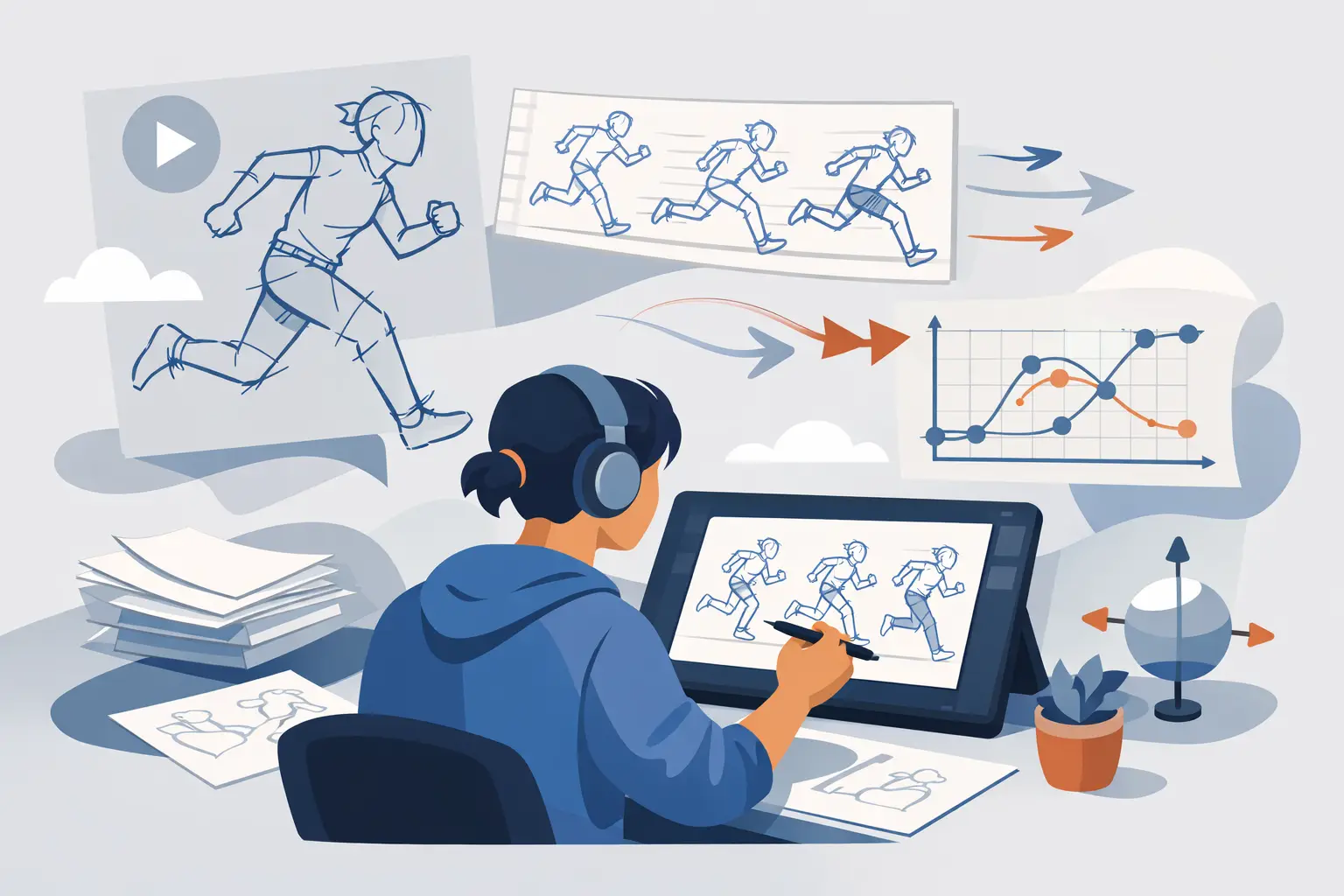
If your scene feels dead in rough form, cleanup will not save it. Rough animation is where motion, acting, timing, and structure either work or fail. That is why learning how to do rough animation matters so much. You are not making pretty drawings yet. You are building a scene that can survive production.
For students, independent filmmakers, and working animators alike, roughs are where decisions happen fast. You test the pose, check the arc, push the expression, and adjust timing before you spend time polishing lines. Done well, rough animation gives you freedom. Done poorly, it creates expensive cleanup problems later.
What rough animation is really for
Rough animation is not unfinished cleanup. It is a planning stage with a specific job: solve movement before surface detail enters the picture. A good rough drawing is clear enough to read, loose enough to revise, and strong enough to carry the action.
That means the priority is not line quality. The priority is whether the pose communicates, whether the spacing supports the action, and whether the scene plays at the right speed. If the character turns, lands, hesitates, or reacts, the rough pass should make that behavior obvious even with sketch lines.
Beginners often try to make roughs look presentable. Professionals usually do the opposite. They strip the drawing down to what the shot needs. A head turn may only need solid construction, eye direction, and a clean path of action. A fast run may need strong contact poses and believable spacing more than costume detail. The cleaner your thinking, the rougher your roughs can be.
How to do rough animation without slowing yourself down
Start with the action, not the details. Before you draw a sequence, define what the shot is doing in plain production language. Is the character taking a cautious step, snapping into a take, or settling after impact? If you cannot state the action clearly, your drawings will wander.
From there, block the key poses. These are the major storytelling beats that carry the shot. In rough animation, keys are not just extreme body positions. They are the moments the audience needs in order to understand intent. A reach has a starting thought, an extension, contact, and a settle. A dialogue scene may depend more on a change of attitude than on broad movement.
Keep these first poses simple and readable. Push the silhouette. Clarify the line of action. Make sure the weight is believable. If the pose does not read in a rough sketch, adding line mileage will not fix it.
Start with strong keys and solid timing
Once the keys are in place, test the timing before you chase in-betweens. This is where many artists waste hours. They fill in drawings too early, then discover the action is too slow, too even, or missing impact.
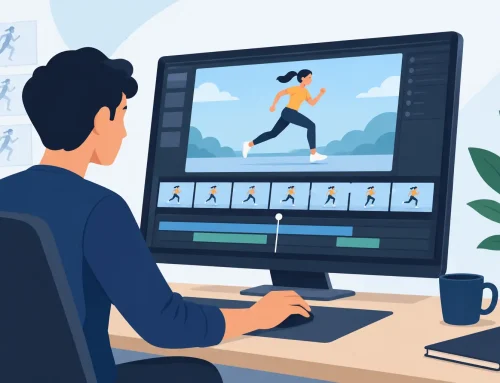
A better approach is to play the shot with just the major beats and adjust exposure before adding more drawings. You want to know whether the character hangs long enough before the take, whether the jump lands too abruptly, or whether the reaction needs one more beat. Timing is not decoration. It is structure.
This is also where your software matters. If you have to stop, open another panel, make numerical changes, and replay the shot every time you want to test a timing idea, you break concentration. A tool built around traditional workflow lets you scrub and adjust timing as you work, which is far closer to the way animators think.
Add breakdowns that explain the movement
After the keys feel right, add breakdowns. These are not filler drawings. They define how the motion gets from one key to the next. A breakdown can change the entire feel of the action by controlling arc, drag, overlap, and direction.
Take a simple arm raise. The keys might be clear, but the breakdown determines whether the move feels mechanical, graceful, tense, or comic. Does the elbow lead? Does the wrist drag? Is there a slight overshoot before the settle? That information belongs in the rough stage, not cleanup.
The same goes for head turns, body shifts, and acting changes. Good breakdowns carry intention. They tell the assistant, the cleanup artist, or your future self exactly how the action is supposed to move.
Spacing is what makes the shot feel alive
Timing tells you how many frames the action takes. Spacing tells you how the action travels across those frames. This is where rough animation starts to look like animation instead of a sequence of drawings.
Even spacing creates an even move, which is useful sometimes and lifeless at other times. Most actions need variation. A quick start, a slow ease, a hard stop, a soft drift, or a sudden snap all come from spacing choices. If a ball toss, character turn, or facial reaction feels wrong, spacing is often the real problem.
When you rough a shot, look at the distance between positions, not just the poses themselves. Tight spacing near the beginning can create anticipation. Wide spacing in the middle can sell force. Tight spacing at the end can create a settle. The exact pattern depends on the shot. A heavy character and a light character should not space movement the same way.
This is why rough animation should be played constantly. Do not judge it by flipping static frames alone. Flip, scrub, replay, and change the timing while the idea is still loose.
Keep the drawing loose, but keep the construction honest
Loose does not mean careless. Rough animation still needs dependable structure. Volumes should stay consistent. Features should track correctly on the head. Limbs should connect convincingly. If the character changes size from frame to frame for no reason, the movement will boil in the wrong way.
The trick is to choose what must stay accurate and what can stay sketchy. In most scenes, the major body masses, perspective, and direction of the action need discipline. Surface details can wait. Fingernails, costume wrinkles, and polished contours do not belong in an early rough pass unless they are essential to the performance.
For beginners, this can feel uncomfortable. There is a temptation to tighten every drawing because a clean line feels safer. In production, that usually slows you down. You want clear decisions, not precious lines.
Rough animation should solve acting too
Rough work is not only for action scenes. It is where acting choices become believable. A pause before a line, a change in eye focus, a small head dip, or a delayed blink can shape a performance more than a big gesture.
This is another place where trade-offs matter. If the shot is dialogue-heavy, you may need fewer drawings but more attention to facial intent and body attitude. If it is broad physical action, the body mechanics may carry more of the scene. There is no single formula. The shot tells you what deserves the labor.
What stays constant is clarity. The audience should understand what the character is thinking and doing from the rough pass alone. If they cannot, the scene is not ready for cleanup.
When to move from roughs to cleanup
A shot is ready for cleanup when the motion reads, the timing holds up under replay, and the construction is stable enough to trace with confidence. Not when every rough drawing is pretty. Not when you are tired of looking at it.
If you still find yourself changing pose intent, shifting arcs, or adding reaction beats, stay in rough animation. Cleanup should refine decisions, not discover them. The more honestly you solve the shot at the rough stage, the faster the rest of the pipeline goes.
For many animators, this is where a traditional digital setup pays off. You want the speed of digital tools without losing the feel of hand-drawn work. Software that lets you draw naturally, paint quickly, and adjust timing in real time keeps the process moving in the right order. That is one reason many artists use FlipBook for roughs and beyond – it respects classic production workflow instead of forcing you into a slower stop-adjust-preview routine.
Common rough animation mistakes
The most common mistake is overworking the first pass. If you polish too early, you become reluctant to change what needs changing. Another is relying on too many in-betweens before the keys are right. More drawings do not create better movement if the underlying structure is weak.
A third mistake is ignoring playback. Rough animation exists in motion, not as a gallery of stills. If you are not checking the shot constantly, you are guessing. Finally, many artists confuse complexity with quality. A simple, readable rough scene with good timing will outperform a dense, messy one every time.
Build the habit that makes roughs better
The fastest way to improve is to treat rough animation like decision-making, not sketching practice. Ask what the shot needs, define the keys, test the timing, add purposeful breakdowns, and keep adjusting while the drawings are still loose. That is how scenes gain life without wasting labor.
If you want better animation, make your rough pass do more of the heavy lifting. A strong rough scene gives cleanup a clear path, gives paint less to fight, and gives your final shot the one thing it cannot fake later – movement that feels right.