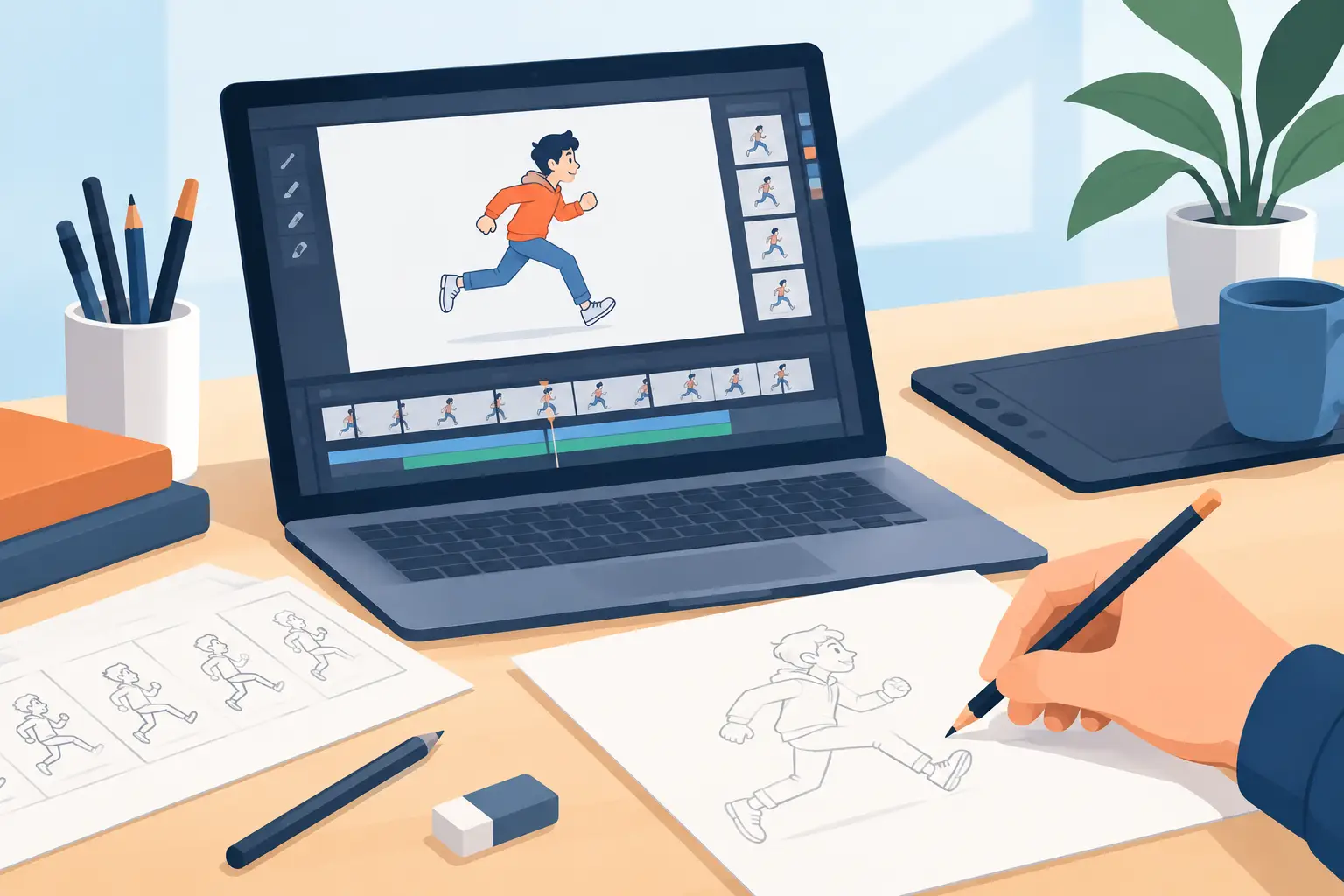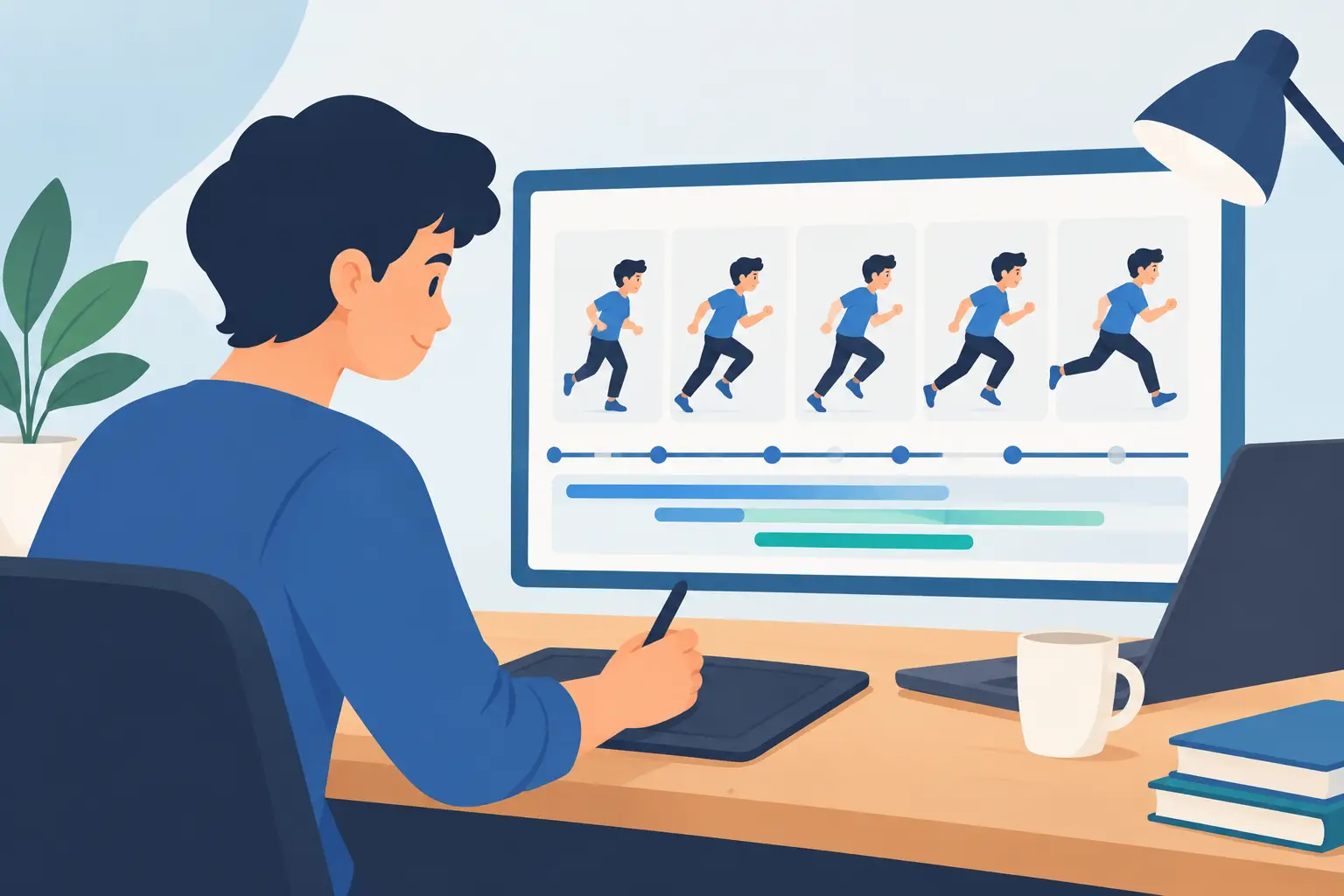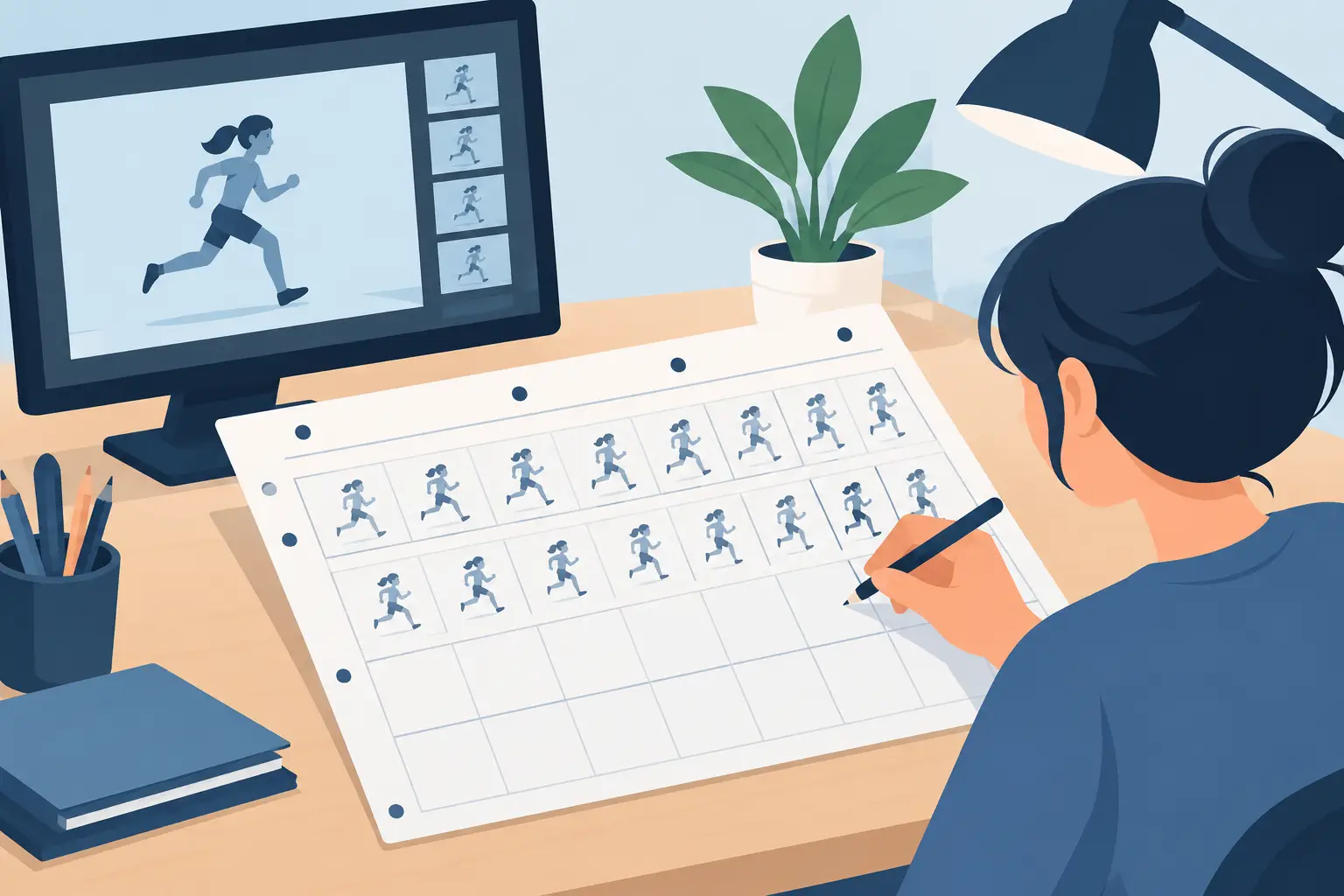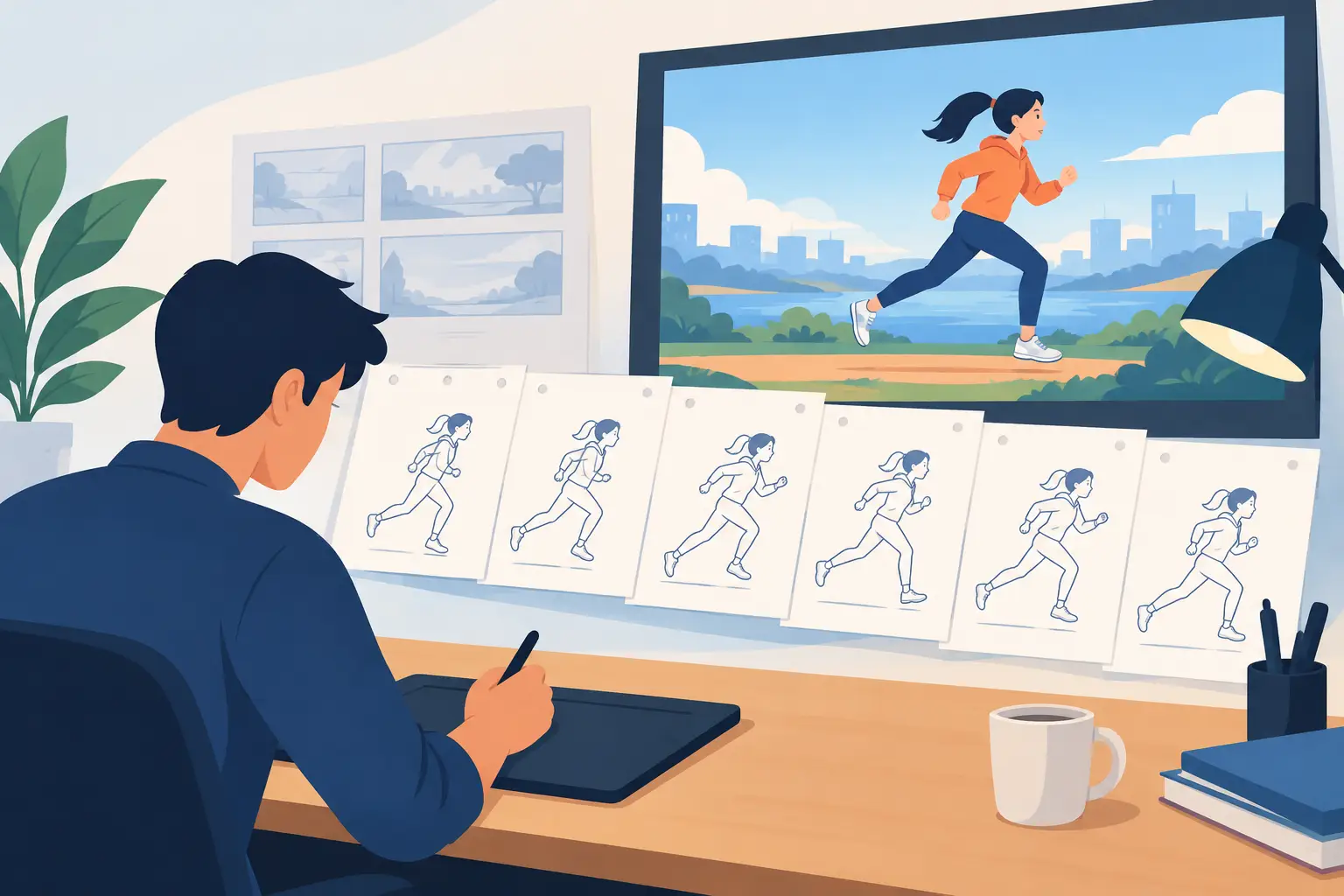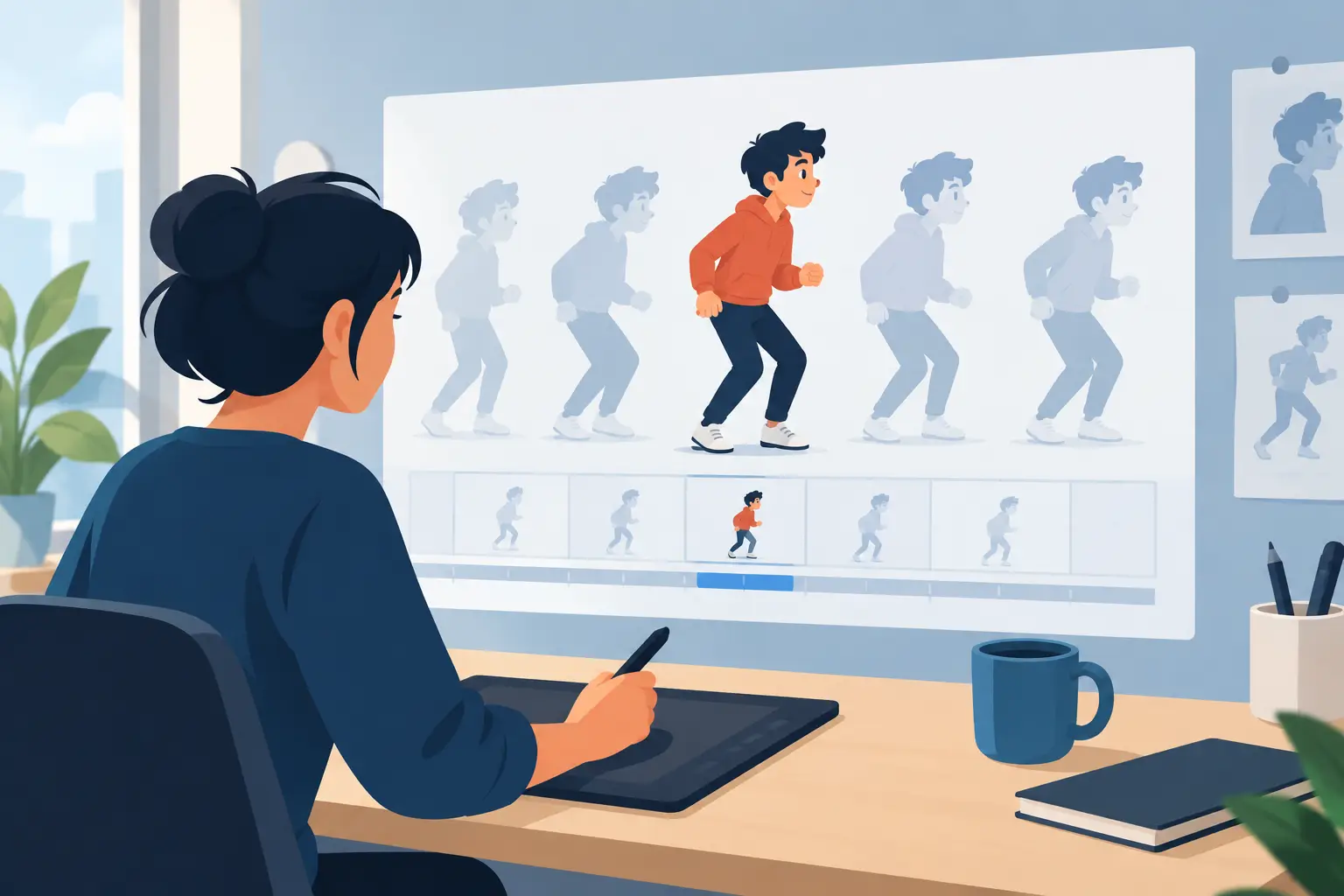
A hold is not empty time between drawings. It is a decision the audience reads instantly: a character is thinking, listening, resisting, waiting, or gathering force for the next action. Learning how to build animation holds is one of the fastest ways to make hand-drawn scenes feel deliberate instead of mechanically busy.
The mistake is treating a hold as a copied drawing that stays on screen until the next pose. That may work for a few frames in a sharp, graphic style, but a longer hold with no thought behind it usually makes a character look frozen. Good holds preserve the clarity of a pose while keeping the life, rhythm, and intent of the shot intact.
Start With the Purpose of the Hold
Before drawing extra frames, ask why the character is holding. The answer determines the timing, the amount of movement, and whether the pose should remain locked or drift.
A reaction hold gives the audience time to register a surprise, insult, or realization. It often needs a clean, readable silhouette and a few extra frames after the character lands in the pose. A listening hold is usually quieter, but it should not be dead. The character may shift focus through the eyes, settle their shoulders, or breathe before responding.
A hold can also create contrast. After fast action, stillness makes the impact land. Before an explosive action, a held anticipation pose builds pressure. In dialogue, a hold gives one character room to receive another character’s line rather than snapping through poses at the same pace as the speech.
Do not decide the length by habit. A hold of four frames, eight frames, or twenty-four frames can all be right. It depends on the shot’s frame rate, the scene’s acting, and what the audience needs to understand. If the story point is already clear, do not keep holding just because the exposure sheet has open space.
Build the Pose Before You Animate the Hold
A strong hold begins with a strong key drawing. If the silhouette is vague, the head angle is unclear, or the line of action has no conviction, adding breathing and eye darts will not fix it. Get the main pose working as a single drawing first.
Check the character at thumbnail size. Can you tell where they are looking? Is the weight planted? Does the pose communicate tension, confidence, boredom, or concern without dialogue? Traditional animation depends on readable staging, and holds expose weak staging more than fast movement does.
Then consider what is under tension. A clenched hand, raised shoulder, compressed torso, or tilted head gives you something to release or settle during the hold. A perfectly symmetrical, evenly balanced pose can be useful for a deliberate deadpan beat, but it gives you fewer natural places to find life.
Let the Character Settle
Most actions do not stop at the exact instant a key pose is reached. The body arrives, overshoots slightly, and settles. That settle may be barely visible, but it makes a held pose feel earned.
For example, after a character drops into a chair, their hips may hit the seat first, their shoulders dip a frame later, and their head settle last. You do not need broad movement. Two or three carefully spaced drawings can carry the physics and the character. A tired character may sink slowly. An alert character may stop sharply, with only a small change in the chest or fingers.
This is where spacing matters more than quantity. Wide spacing into the pose makes the arrival feel forceful. Tighter spacing as the body settles makes the energy disappear naturally. If every in-between is evenly spaced, the hold can feel like a slow-motion slide instead of a stop.
Add Life Without Making the Character Fidget
The goal is not constant motion. Unnecessary movement pulls attention away from the acting and makes a held scene look nervous. Choose one or two controlled sources of life that support the character’s emotional state.
Breathing is often useful, particularly in medium and close shots. Keep it connected to structure: the rib cage, shoulders, clothing, and head should react as one body, not as separate parts moving on their own schedule. A relaxed breath is subtle and broad. A frightened or angry breath may be shorter, higher in the chest, and paired with tension in the neck.
Eye movement is another powerful tool, but use it with restraint. A character can hold eye contact, glance toward a thought, then return to the other character. That change should mean something. Random eye darts are not life. They are visual noise.
Hands and fingers can carry a hold when the acting calls for it. A finger tightening around a cup, a thumb rubbing a sleeve, or a hand slowly relaxing can reveal more than a large head movement. Keep these details subordinate to the main pose. The audience should read the idea first and discover the secondary movement afterward.
Control Holds With Timing, Not Just Drawings
Animation holds are timing decisions. A perfectly drawn pose can still fail if it appears one beat too early or leaves one beat too late. Scrub through the scene and watch for the moment the character’s idea changes. That is usually where the hold belongs.
In dialogue, avoid matching every word with a new pose. Let a character think through a phrase. Hold through less important words, then change the pose on the word or thought that shifts the scene. This creates contrast and prevents the familiar problem of dialogue animation that looks busy but says very little.
Use playback to judge holds at speed. Looking at individual drawings can convince you that a tiny adjustment is visible when it disappears in motion. The reverse is also true: a two-frame delay may completely change a reaction. In FlipBook, you can adjust timing while the scene plays, which makes it practical to test these beats directly instead of repeatedly stopping, changing an exposure, and previewing again.
A useful production habit is to make the hold slightly longer than your first instinct, play the shot in context, and then trim it until the beat feels inevitable. Animators often cut a hold because they are staring at it too long while working. The audience sees it once, at scene speed, with the surrounding action giving it meaning.
Know When to Use a True Hold
A true hold repeats the same drawing for multiple frames. There is nothing amateurish about it when it is used on purpose. In fact, a clean held drawing can be stronger than adding motion simply because animation software makes it easy to do so.
Use a true hold when the character must feel locked in place, when the scene needs a graphic pause, or when the eye needs rest before a new action. It is especially effective after a sudden head turn, a broad take, or a strong silhouette change. The stillness tells the audience to read the result.
The trade-off is that a long repeated drawing can reveal line boil, unstable color edges, or an overly rigid pose. In a close-up, you may need a replacement drawing with slight line variation, a blink, or a small breathing change. In a distant shot, the same exact hold may read perfectly and save production time.
Watch the Cuts Around the Hold
A hold does not live alone. The cut into the shot and the cut out of it affect its apparent length. If the previous shot ends on fast movement, even a short hold can feel calm and substantial. If the previous shot is already quiet, you may need a clearer pose change or a more defined eye direction to keep the new shot from feeling stalled.
Also watch the first drawing after the hold. If it leaves too gently, the character may seem to drift out of the thought. If the next action needs energy, give it a clean breakdown or a stronger directional change. A hold is often the spring that makes the next pose read.
Test Your Holds Like an Animator, Not a Frame Collector
Play the shot from several seconds before the hold through several seconds after it. Do not judge it by the held frames alone. Ask whether the audience can read the thought, whether the body has settled, and whether the next action has more impact because of the pause.
Then test it without sound if dialogue is involved. If the acting only works because the line explains it, the pose may need more clarity. Finally, step back from the screen. A hold that reads from a normal viewing distance is doing its job better than a collection of tiny details visible only when you are zoomed in.
The best holds do not call attention to their technical construction. They give the audience just enough time to feel what the character feels, then hand the scene back to the next drawing. Build them with clear posing, purposeful timing, and only the movement the moment truly needs.